Orkje, a Quasar design classic
A lighting fixture with history
The Orkje is one of the most recognizable and beloved designs in Quasar’s history. Designed in the late 1990s and part of the collection until 2017, the Orkje has become a fixture that is now considered by many to be a true design classic.
That a lamp is still cherished, maintained, and re-hung after more than twenty, sometimes even thirty, years speaks volumes. Not only about the design itself, but also about the way the Orkje has become a part of the daily lives of its owners.
This page is intended as a heritage page: a place where the story of the Orkje comes together with practical information to ensure you can continue to enjoy it for as long as possible.
Design philosophy
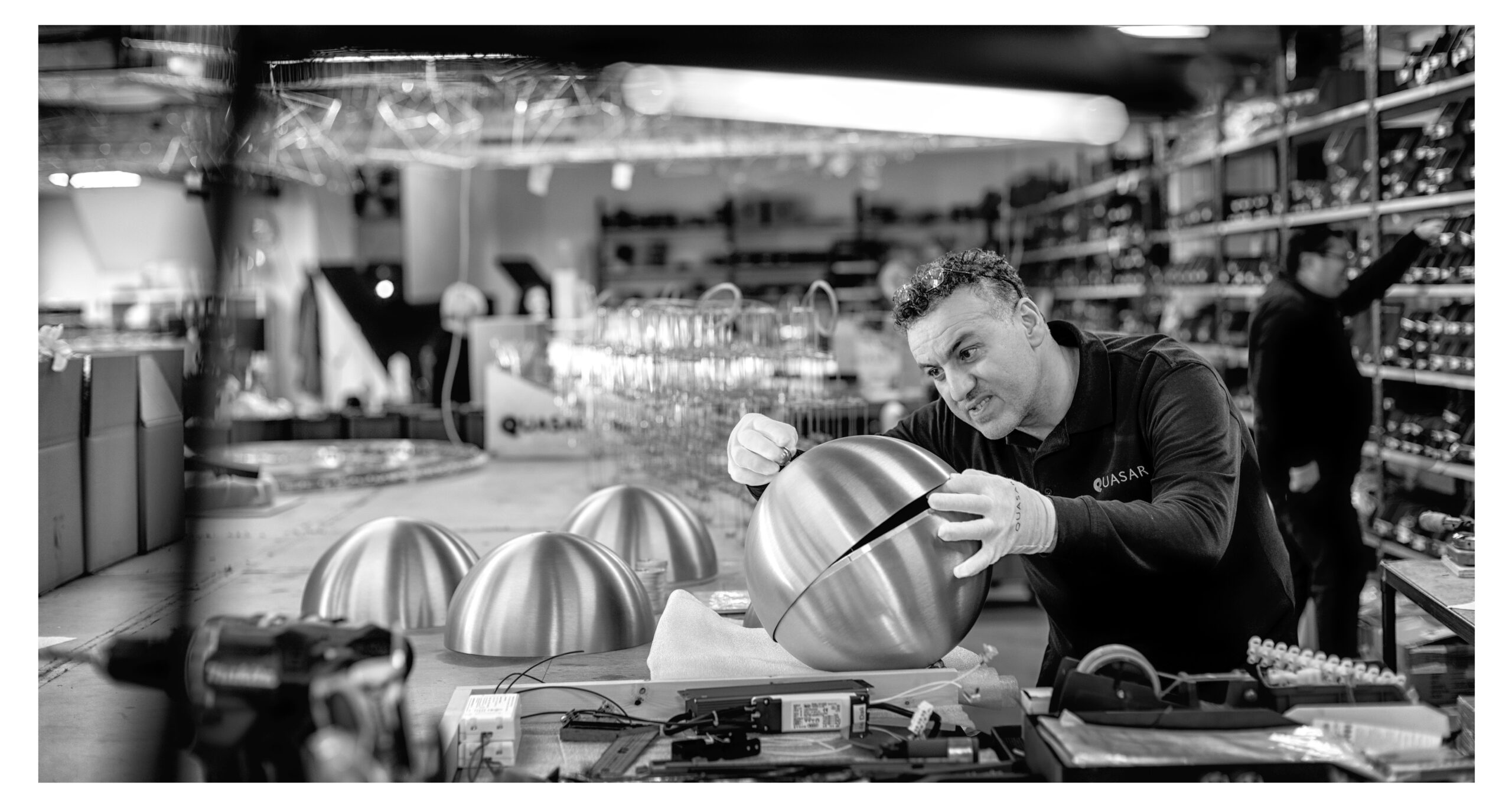
The Orkje was designed during a period when Quasar began collaborating with designer Jan Pauwels. His lighting fixtures are characterized by transparency, refinement, and the idea that light should float in space, without a heavy visual presence.
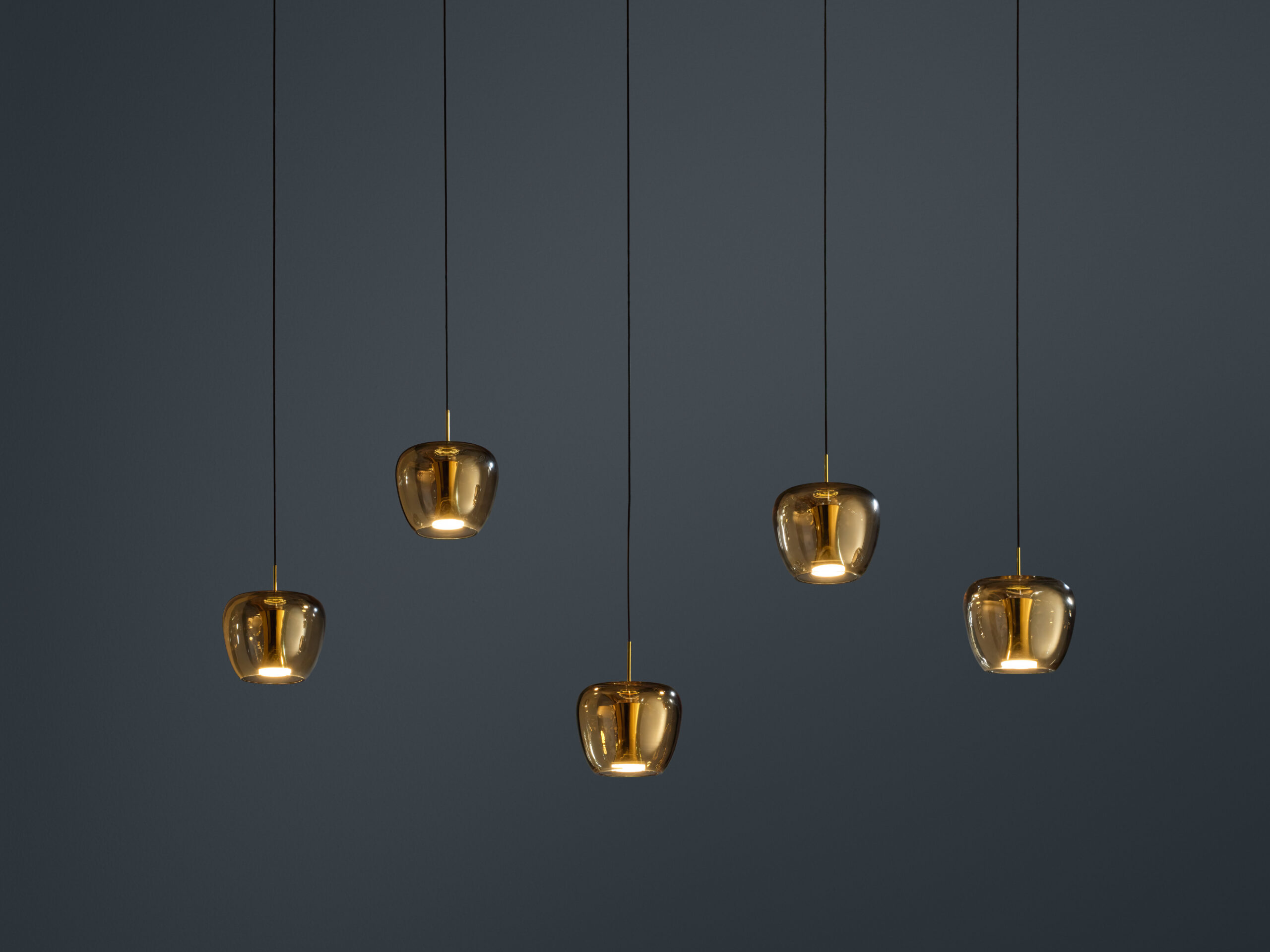
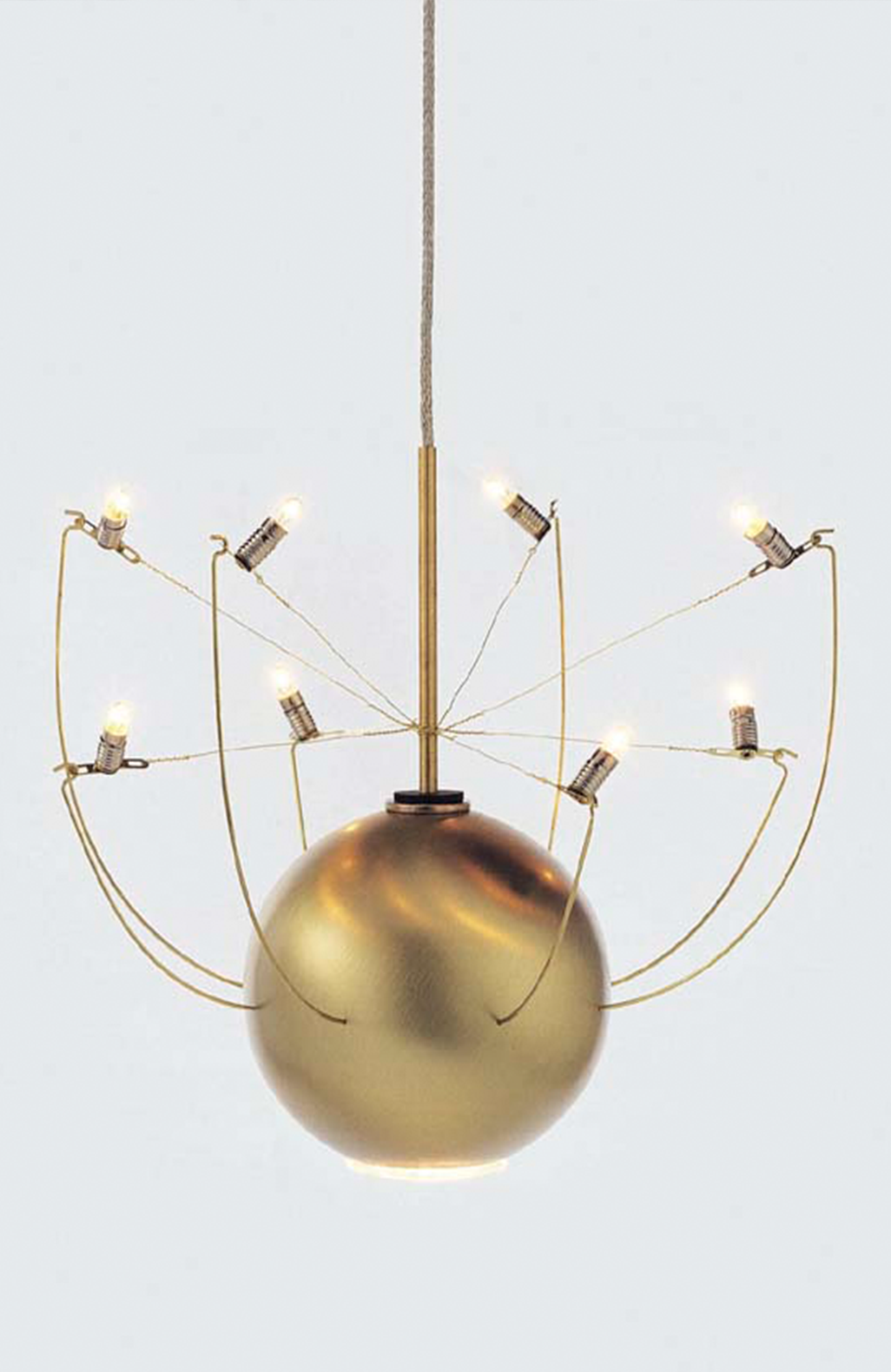
In the Orkje, this is reflected in the seemingly simple composition of metal spheres, delicate rods, and subtle light points. The fixture is not a dominant form, but a lighting sculpture that becomes part of the interior.
It is precisely this understated quality that makes the Orkje timeless.
The Orkje as a product family
Although the Orkje is often associated with one specific image, the model existed in several variations:
• Orkje – single pendant lamp
A solitary version, featuring a single sphere as the central light source.
• Orkje 3 – the best-selling version
Three Orkjes in a row, connected by two tubes, with a transformer centrally placed. This composition became the iconic piece of the series.
• Orkje wall lamp
A derivative version for wall mounting, retaining the same design DNA.
• Limited edition desk lamp
A small-scale, unique version that never became part of the standard collection.
In addition, there was its larger sibling: the Ork Grande. This version follows the same design language, but with a larger sphere and a more powerful light source.
Applications
The Orkje was available in two finishes:
- Brass
- Nickel (silver-colored)
The nickel version had a relatively glossy finish in the early series. This was soon changed: the spheres were first sanded and then clear-lacquered, resulting in the characteristic satin finish that many people recognize today.
This finish not only enhances the aesthetics but also protects the metal from discoloration—with careful maintenance.
Lighting and technology (in the context of its time)
The Orkje was designed at a time when halogen lighting was the standard for decorative lighting. The combination of small light points and a larger light source created a warm, layered light.
The technology was closely linked to the design:
- compact light sources
- internal wiring within the sphere
- a central transformer for multiple versions
Precisely because the design is so specific, maintenance and any adjustments always require careful attention.
Maintenance and preservation of a design classic
The fact that so many Orkjes are still in use today emphasizes the quality of the design and the materials used. At the same time, a fixture of this age requires attention.
Cleaning
- The fixture is clear-lacquered. Therefore, do not use abrasives or polishes.
- Clean preferably with a mild detergent and a soft cloth.
Light sources and technology
- Original light sources and parts have become more limited in availability over the years.
- Not all parts can be replaced or repaired.
- Modifications, such as switching to LED, often require trial and error due to dimensions and technical compatibility.
Realistic expectations
The Orkje is no longer produced. Maintenance is therefore often focused on preservation, not on a complete restoration to mint condition. Sometimes a solution is possible, sometimes not—and it is precisely this honesty that is part of the responsible approach to heritage.
A place in Quasar’s history
The Orkje marks an important chapter in Quasar’s development as a design and manufacturing company. It demonstrates how a clear idea, carefully executed, can evolve into a fixture that transcends generations.
We don’t see the fact that owners today still ask questions about maintenance, parts, and use as a burden, but as a compliment.
The Orkje lives on—in interiors, in memories, and in the history of Quasar.
This page is intended as a living document. Other historical models from the Quasar collection may be added in the future.
Examples include: Wings, Bird, Extase, Ara, Madonna, and Maxara.
Frequently Asked Questions (FAQ)
Is the Orkje still in production?
No. The Orkje was part of the Quasar collection until 2017 and has not been produced since then.
Can my Orkje still be repaired?
Unfortunately we can’t repair your Orkje anymore. This depends largely on the availability of parts. For example, the internals are no longer available or replaceable. A complete restoration to new condition is generally not possible.
Are parts still available?
Not all parts are available for the Orkje. Structural and custom-made parts, in particular, have been discontinued over the years. The small light sources and transformers are still available. The thin wires and mini lamp holders are also still available. Critical components such as the internals and the coaxial suspension cable are no longer available.
Which light sources are used in the Orkje?
The Orkje uses:
• Small E5/8 light sources of 1.2 watts/12 volts (the characteristic mini bulbs; there are 8 on a small Orkje and 18 on a large Ork).
• The downlight, the spotlight that points downward, was originally a GU4 12-volt 20-watt halogen bulb for the Orkje and a G5.3 ALU 12-volt 35-watt bulb for the large Ork.
Where can I order the small E5/8 bulbs?
The original E5/8 1.2W/12V light sources can be ordered, while supplies last, through the Quasar webshop:
https://www.quasarwebshop.nl/webshop/lichtbronnen/detail/126/lichtbron-e58-12v12w.html
Can I convert the Orkje to LED?
Replacing LEDs isn’t easy, but it is possible. Due to differences in dimensions, light output, dimmability, and minimum transformer load, this is often a matter of trial and error, depending on the situation. Quasar cannot recommend a specific LED light source. If you convert to LED yourself, be sure to purchase the correct transformer for your chosen light source.
Using the current transformer with a new LED light source may not produce the desired result, or at least not the desired result, because the minimum wattage of the existing transformer does not match the wattage of your new LED light source. This is something to pay extra attention to!
Why is my Orkje flickering?
Flickering is often caused by an insufficient load on the transformer, for example, when LED light sources require less power than the transformer is designed for.
Why does my Orkje switch off after a while?
If the Orkje switches off completely after a while, it’s often due to the transformer overheating. After cooling down, the light will work again. If this built-in protection activates frequently, it will cause wear and tear on the transformer. Replacing it completely with a new one is the best solution. The cause of the overheating should also be carefully investigated. This is often caused by excess wire being coiled instead of cut, preventing the transformer from properly dissipating heat.
Where can I order a new transformer?
A replacement transformer can be ordered from the Quasar webshop while supplies last. Various brands have been available over the years. The image on the website may not match your transformer, but technically the new transformers have the same specifications:
Orkje: https://www.quasarwebshop.nl/webshop/transformatoren/detail/133/transformator-orkje–ork-grande.html
Orkje 3: https://www.quasarwebshop.nl/webshop/transformatoren/detail/134/transformator-orkje-3.html
How do I maintain the finish of the Orkje?
• Do not use polishes or abrasives.
• Clean only with a soft cloth and mild detergent.
• The spheres are clear-lacquered; damage to this lacquer can lead to discoloration.
Is there any documentation or a manual for the Orkje?
Due to the age of the model, not all documentation is available. This page therefore serves as a central source of information on the history, use, and maintenance of the Orkje.

